
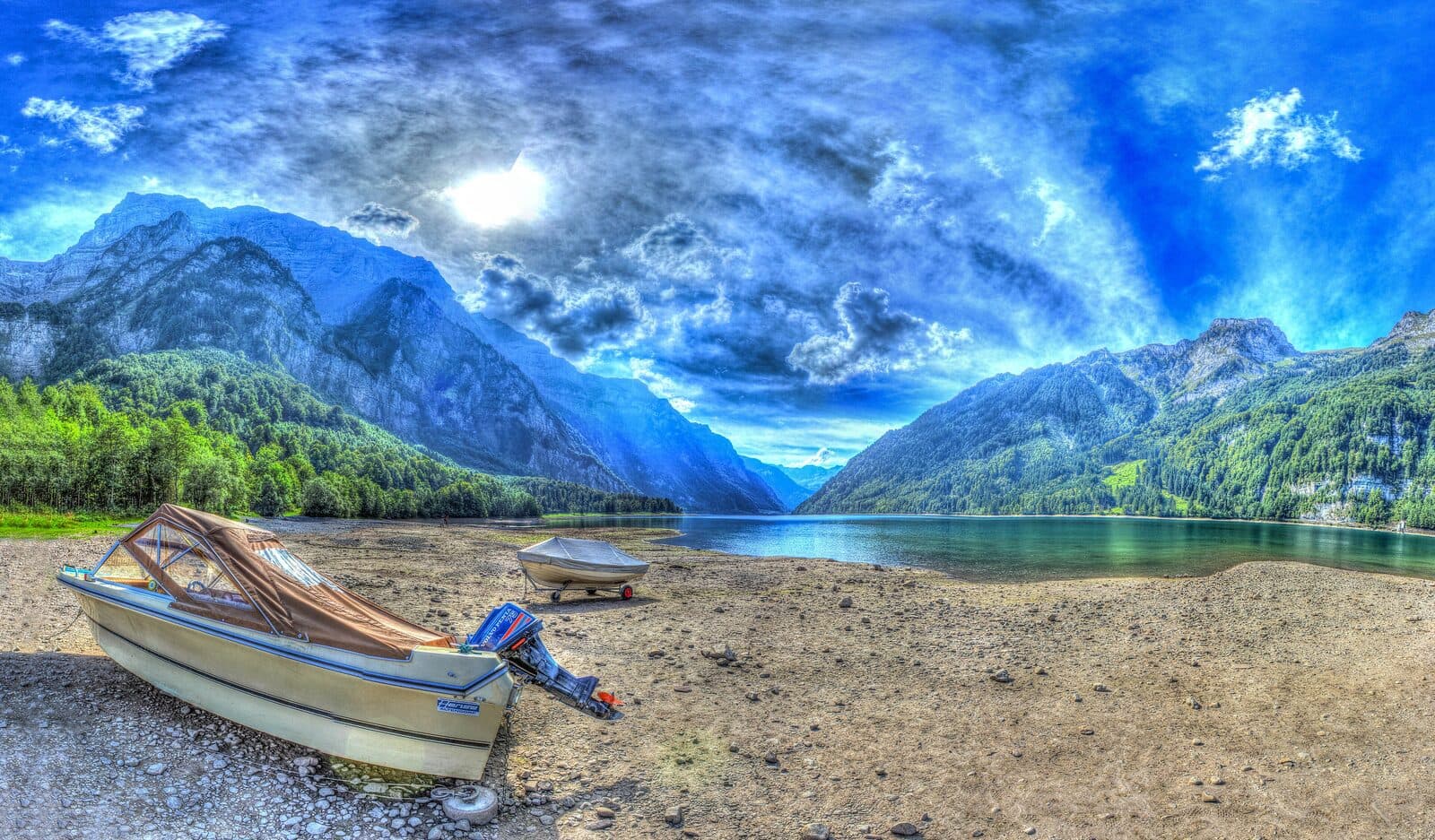
If you live in Glarus, your permits, renewals, family reunification and settlement applications go through the Migration Office of the Canton of Glarus (Migrationsamt). Glarus applies federal immigration law like every other canton, and the language for everything official is German. This page explains who to contact, how long things roughly take, what language level you need and how naturalisation works here.
In short
- Your office: the Migration Office of the Canton of Glarus. Find it on https://www.gl.ch by searching «Migrationsamt».
- Processing time: around four weeks for a complete standard application. First B permits and family reunification from outside the EU/EFTA usually take longer.
- Language: German. Family reunification from a third country usually needs A1 spoken; an early C permit needs B1 spoken and A1 written, and naturalisation needs B1 spoken and A2 written.
- Naturalisation: the Confederation, the canton and your municipality all have to agree. Glarus has only three municipalities: Glarus, Glarus Nord and Glarus Süd.
- Tax: without a C permit you are usually taxed at source; above CHF 120'000 gross a year, an ordinary assessment is compulsory.
Glarus at a glance
Glarus (Glaris in French, Glarona in Italian) is one of the smallest Swiss cantons by area and population. It lies east of Lake Zurich, its capital is the town of Glarus, and it still holds a Landsgemeinde, an open-air assembly where citizens vote by show of hands. The economy combines an industrial past with growing outdoor and mountain tourism, and the cantonal administration is small.
Roughly one quarter of residents are foreign nationals, close to the Swiss average. Most hold a B residence permit or a C settlement permit. L short-term permits appear mainly for work, and G cross-border permits are rare given the canton's size. Asylum seekers (N, F and S permits) are allocated to Glarus by the State Secretariat for Migration (SEM) under a federal distribution key (Art. 27 AsylA). For exact and current figures, check the Federal Statistical Office (FSO) and the cantonal statistical office.
Which law applies
Glarus applies federal law first:
- the Federal Act on Foreign Nationals and Integration (FNIA, SR 142.20);
- the Ordinance on Admission, Residence and Gainful Employment (OASA, SR 142.201);
- for EU/EFTA nationals, the Agreement on the Free Movement of Persons (AFMP, SR 0.142.112.681) and its implementing ordinance (OFMP, SR 142.203);
- the Asylum Act (AsylA, SR 142.31);
- the directives and practice of the SEM.
The key articles are Art. 18 FNIA (admission for work), Art. 33 FNIA (B permit), Art. 34 FNIA (C permit) and Art. 37 FNIA (moving to another canton). The canton adds its own rules: an introductory act implementing the FNIA, a cantonal citizenship act, and administrative-procedure law for proceedings and appeals. For the exact titles and numbers of these cantonal acts, check the official Glarus legislative collection.
The glossaries explain the federal terms: FNIA and OASA, AFMP and OFMP and the Asylum Act.
The Migration Office
The Migration Office of the Canton of Glarus handles:
- B permits for EU/EFTA and third-country nationals, L permits and C permits;
- renewals and changes of status (Art. 33, 34 and 37 FNIA);
- family reunification (Art. 42 to 47 FNIA);
- coordination of cantonal naturalisation procedures.
Contact: search «Migrationsamt» on https://www.gl.ch. The SEM also keeps a directory of all cantonal migration offices at https://www.sem.admin.ch/sem/de/home/sem/kontakt/kantonale_behoerden.html. The address, email, phone number, any online portal and opening hours can change, so always check the official cantonal page.
How long it takes
No law fixes a processing time. It depends on how complete your file is, how busy the office is and how complex your situation is. As a rough guide, a well-documented standard application in Glarus takes around four weeks.
- First B permit (for work or family reunification) usually takes longer, because the office often needs more information and, for third-country nationals, SEM approval.
- B renewals are usually quicker if nothing has changed.
- C permits (normally after ten years, or after five under Art. 34 para. 4 FNIA) and family reunification from third countries (Art. 42 to 47 FNIA) depend on the file.
The office gives no guaranteed deadline, and this estimate gives you no right to a decision by a given date. Where the SEM has to approve a cantonal decision (Art. 99 FNIA with Art. 85 and 86 OASA), add several weeks to months.
Language requirements
The official language in Glarus is German. Tests are in standard German, not Swiss German. Levels follow the Common European Framework of Reference for Languages (CEFR).
- Family reunification from a third country: for a B permit, you usually need German at least at A1 spoken (Art. 58a FNIA; Art. 77d OASA).
- Early C permit (after five years instead of ten): B1 spoken and A1 written in the local language, German (Art. 34 para. 4 FNIA with Art. 62 para. 1bis and Art. 77d OASA). The same level applies to EU/EFTA nationals.
These are federal minimums. The office still has discretion, and you must meet the other integration criteria too. Accepted proof includes the fide certificate in German and the diplomas listed in Art. 77d OASA, such as telc, Goethe or ÖSD at the right level. The current SEM directives and the office's practice decide which certificates it accepts.
B, L and C permits
Glarus follows the federal rules and SEM directives.
- B residence permit (Art. 33 FNIA): third-country nationals are admitted for work under Art. 18 FNIA, which means priority for resident workers, local salary and working conditions, and federal quotas. EU/EFTA nationals receive it under free movement.
- L short-term permit: for limited work or other temporary stays. In Glarus it is mostly linked to employment and numbers are small.
- C settlement permit (Art. 34 FNIA): normally after ten years (Art. 34 para. 2 FNIA), or after five with successful integration (Art. 34 para. 4 FNIA with Art. 62 para. 1bis and Art. 77d OASA). The office looks mainly at language skills, working without social assistance, respect for public security and order, and paying what you owe.
- Moving canton and losing a permit: changing canton (Art. 37 FNIA) and revocation (Art. 62 and 63 FNIA) follow federal law. Revocation grounds are mostly about public security and order and certain breaches of obligations. Debts or debt-enforcement proceedings alone do not lead to automatic revocation, but like social assistance they count in the integration assessment.
Fees: fees for B, L and C permits are set under the federal fee ordinance for the FNIA and applied by the Migration Office. Check the official cantonal page for the current amounts.
For drafting a specific application or job description, speak to your employer, an HR service or a specialised lawyer.
Naturalisation
Ordinary naturalisation has three levels: the Confederation, the Canton of Glarus and your municipality. All three must agree.
Federal rules:
- The Swiss Citizenship Act (SCA, SR 141.0) requires ten years of residence in Switzerland (Art. 9 SCA), successful integration, familiarity with Swiss life, and that you pose no threat to Switzerland's internal or external security (Art. 11 SCA). Art. 12 SCA sets out the integration criteria.
- The Swiss Citizenship Ordinance (SCO, SR 141.01) sets the language level: B1 spoken and A2 written in a national language (Art. 6 SCO). In Glarus that means German.
Cantonal and municipal rules: Glarus also requires several years of residence in the canton and in your municipality, as set by the cantonal citizenship act and municipal regulations. Interviews and knowledge tests differ between municipalities, so check your municipality's regulation and the cantonal legislative collection for the exact periods.
See naturalisation in Switzerland and the 2018 Citizenship Act glossary.
Asylum
Glarus belongs to one of the federal asylum regions. The accelerated procedure under the Asylum Act starts in a Federal Asylum Centre (FAC) of that region. If your case moves to the extended procedure, you are allocated to a canton under the SEM distribution key (Art. 27 AsylA), and Glarus takes a share in line with its population. The SEM website (sem.admin.ch) lists the region and FAC location.
A regional lead organisation runs the legal advice office for asylum seekers (RBS) for the canton. It provides the free legal representation in the extended procedure foreseen by the Asylum Act (Art. 102f AsylA) and wider advice. The SEM directory tells you which organisation it is and how to reach it. See the Asylum Act glossary.
Tax at source
If you work without a C permit, including as an EU/EFTA or third-country national on a B permit, your employer usually deducts tax from your salary directly. This withholding tax rests on federal law (Art. 83 ff. of the Federal Act on Direct Federal Taxation, DBG, SR 642.11), the Tax Harmonisation Act (StHG) and the cantonal tax act. The cantonal tax administration applies it.
- Above CHF 120'000 gross a year: if you live in Switzerland, a subsequent ordinary assessment (NOV) is compulsory (Art. 89 DBG). This federal threshold is the same everywhere.
- Below the threshold: the withholding tax is usually final, but you can ask for an ordinary assessment (Art. 89a DBG).
- When it ends: once you receive a C permit or marry a Swiss citizen, you move to ordinary assessment.
The current cantonal tax rates apply. For tax questions, ask the cantonal tax administration or a qualified tax adviser. Note that registering a home in a canton for tax reasons without really moving your life there can also cause problems under immigration law.
Municipalities and housing
After its municipal reform, Glarus has three municipalities:
- Glarus (the capital)
- Glarus Nord
- Glarus Süd
Some integration services are run together with neighbouring cantons. Rents change quickly, so check the official housing and rent statistics of the FSO and the cantonal statistical office for current figures.
Getting legal help
This page explains the law and normal administrative practice. It is not individual legal advice. For hardship cases (Art. 30 para. 1 let. b FNIA with Art. 31 OASA), family reunification problems or an appeal, contact a lawyer registered with the Glarus cantonal bar. Where you apply is decided by where you live, and moving canton only to get a better outcome can be treated as abuse.
Related pages
- German-speaking standard-practice cantons, the cluster Glarus belongs to
- B residence permit, C settlement permit, L short-term permit, G cross-border permit
- Ci permit for accompanying family, F permit, N permit, S protection status
- Divorce and your residence permit (Art. 50 FNIA)
- Family reunification in Switzerland