
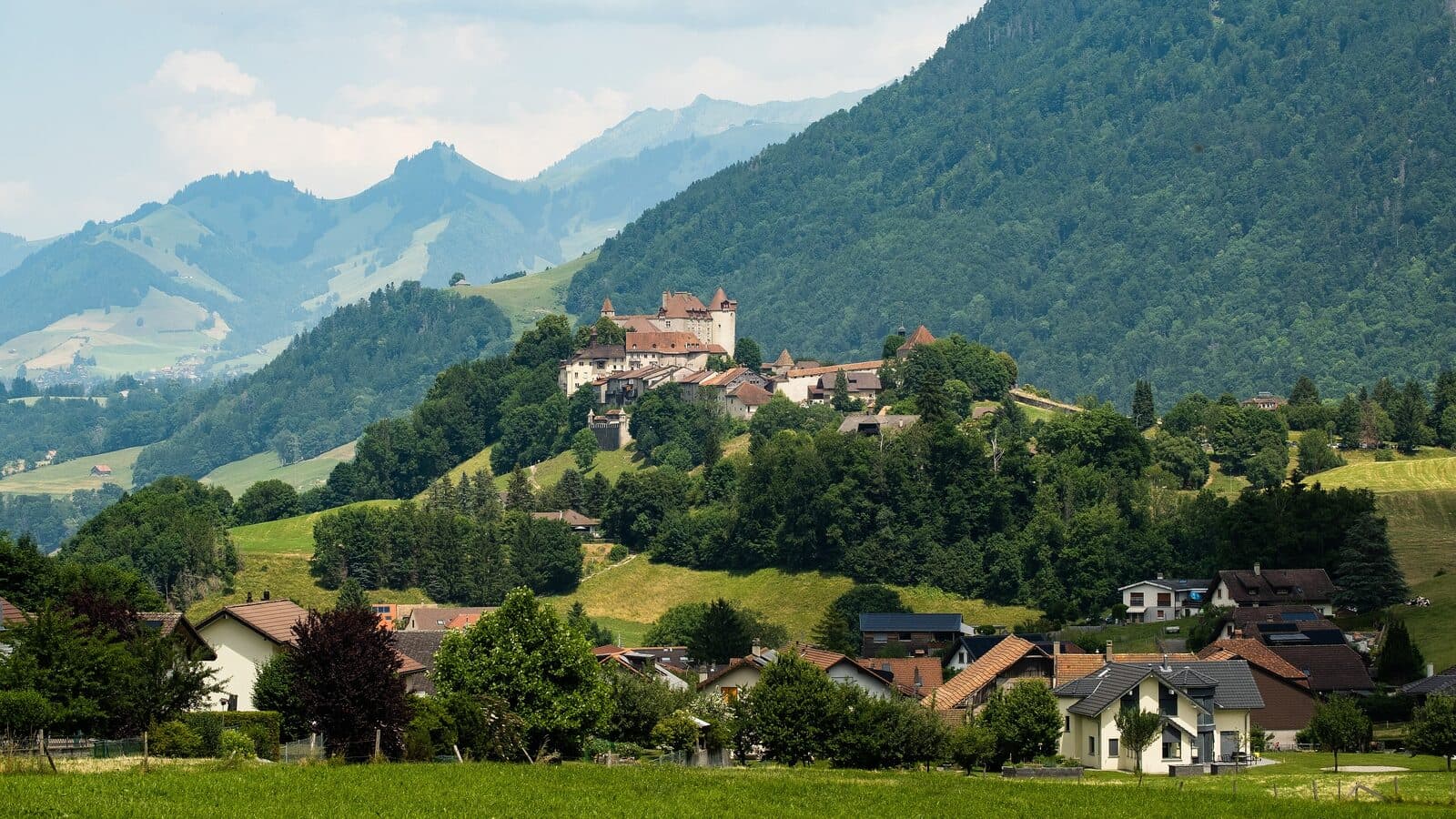
In the Canton of Fribourg, residence permits are handled by the Service de la population et des migrants (SPoMi), in German the Amt für Bevölkerung und Migration. Fribourg is bilingual, so you can deal with the SPoMi and prove your language skills in either French or German. The law itself is federal and the same as in every other canton; what differs is the local authority and its practice.
In short
- Your authority: the SPoMi, at https://www.fr.ch/spomi. Check the address, opening hours and online portal there, as they change.
- Two languages: applications, decisions and language certificates can be in French or German.
- Processing time: around six weeks as a rough guide for the cantonal part. If the State Secretariat for Migration (SEM) must approve, add its time.
- Naturalisation: federal minimum of ten years' residence and a C permit, plus a cantonal residence period set between two and five years by federal law.
- Which canton is yours depends on your legal domicile (Art. 23 CC), not on choice.
Fribourg at a glance
Fribourg lies on the language border between French- and German-speaking Switzerland and has both as official languages. The capital is Fribourg / Freiburg. The canton has roughly a third of a million residents, and about a quarter of them do not hold Swiss citizenship, slightly below the Swiss average. For current figures, see the FSO regional statistics (https://www.bfs.admin.ch/bfs/de/home/statistiken/regionalstatistik.html) or the cantonal statistics office (https://www.fr.ch/sstat).
The largest municipalities are Fribourg / Freiburg, Bulle, Villars-sur-Glâne and Marly. The university brings an international population, so many permits here relate to study or to EU/EFTA free movement. Rents vary by region; the FSO rent statistics and the cantonal statistics office publish current figures.
Your migration office: the SPoMi
The SPoMi is the only cantonal contact for residence matters in Fribourg. It handles all permit procedures under the Federal Act on Foreign Nationals and Integration (FNIA) and the Agreement on the Free Movement of Persons (AFMP), including changes of status and renewals, and takes part in asylum and naturalisation procedures.
You choose whether to write in French or German, and the decision is in principle issued in the language you used. Its internal structure can change, so always take the address, email, phone number, opening hours and portal from https://www.fr.ch/spomi. The SEM keeps a list of all cantonal migration offices at https://www.sem.admin.ch/sem/de/home/sem/kontakt/kantonale_behoerden.html.
The law that applies
Immigration law is federal. The main rules are:
- FNIA (SR 142.20): work for third-country nationals (Art. 18), study (Art. 27), hardship cases (Art. 30 para. 1 let. b), L permit (Art. 32), B permit (Art. 33), C permit ordinary and early (Art. 34 para. 2 and para. 4), change of canton (Art. 37), family reunification (Art. 42 and following), break-up of the family (Art. 50), integration (Art. 58a and 58b), revocation of the C permit (Art. 63) and SEM approval (Art. 99).
- Ordinance on Admission, Residence and Gainful Employment (OASA, SR 142.201): hardship cases (Art. 31), language proof and integration (Art. 60 para. 2, 62 para. 1bis and 77d), family reunification deadline (Art. 73) and the approval procedure (Art. 86).
- AFMP (SR 0.142.112.681) and its implementing ordinance (OFMP) for EU/EFTA nationals.
- Asylum Act (AsylA, SR 142.31): allocation to cantons (Art. 27) and free legal representation (Art. 102f).
- Swiss Citizenship Act (SCA, SR 141.0): residence and C permit (Art. 9), requirements (Art. 11), integration (Art. 12) and procedure (Art. 13). The language requirement is in a separate text, the Citizenship Ordinance (SCO, SR 141.01), Art. 6.
- Civil Code (CC, SR 210): domicile (Art. 23), which decides which canton is responsible.
- Victim Support Act (VSA, SR 312.5) where relevant, for example in cases of domestic violence.
Fribourg's own implementing law, citizenship act and administrative procedure law set out the cantonal procedure. You can find them in the canton's systematic collection of legislation. For the federal terms, see the FNIA and OASA terminology glossary, the AFMP and OFMP glossary and the AsylA glossary.
How long it takes
Fribourg does not consistently publish processing statistics. As a rough guide, the cantonal part takes around six weeks. It depends on how complete your file is, how complex the case is and the office's workload.
| Procedure | Rough guide | Note |
|---|---|---|
| General baseline | about 6 weeks | your case may differ |
| First B permit | usually longer | first check, SEM approval if needed |
| B renewal | usually shorter | with a complete file |
| C permit (ordinary or early) | depends on the case | includes the integration check |
| L permit | depends on the case | depends on the purpose |
If the SEM must approve the decision (Art. 99 FNIA with Art. 86 OASA), for example in some third-country cases and exceptions, its procedure comes on top, and the total can be much longer.
Language requirements
Because Fribourg is bilingual, you can prove your language skills in French or German, depending on your region or municipality. Accepted proofs include fide (in French or German) and recognised diplomas such as DELF/DALF for French or Goethe, telc or ÖSD for German (Art. 77d OASA). Levels follow the Common European Framework of Reference for Languages (CEFR).
- Family reunification from third countries: usually oral level A1, or registration for a language course (under the FNIA family rules).
- Early C permit (Art. 34 para. 4 FNIA): oral B1 and written A1 (Art. 62 para. 1bis with Art. 77d OASA). According to cantonal data, Fribourg asks for B1 oral and A1 written from both EU/EFTA and third-country nationals, in French or German. This is practice, not a guarantee.
- fide is the Swiss standard test. It is run by accredited local providers, not one central office.
Cantonal integration courses are offered in both languages. For more on tests and diplomas, see proof of language skills: A1 / A2 / B1 fide for permit and naturalisation.
Permits: B, L and C
Permits follow the federal FNIA and OASA and the SEM directives. The SPoMi applies them, with some room for judgement mainly when assessing integration (Art. 58a FNIA).
- B residence permit (Art. 33 FNIA): for living here with or without work, for example to study (Art. 27 FNIA). Third-country nationals who work must meet the admission rules in Art. 18 FNIA and following: labour-market interest, quotas, pay and working conditions. EU/EFTA nationals are covered by the AFMP and OFMP.
- L short-term permit (Art. 32 FNIA): for stays with a set end date, in categories by purpose.
- C settlement permit (Art. 34 FNIA): normally after ten years, or five years for nationals of some states under treaties or reciprocity. Early after five years under Art. 34 para. 4 FNIA if you are well integrated and meet the language level above.
- Hardship case (Art. 30 para. 1 let. b FNIA with Art. 31 OASA): an exception to the admission rules in cases of serious personal hardship, usually with SEM approval (Art. 99 FNIA).
More detail: the B residence permit, the L short-term permit, the C settlement permit, the G cross-border commuter permit and the Ci permit for accompanying persons.
Naturalisation
Ordinary naturalisation has three levels: the SEM's federal approval (Art. 13 SCA), the canton under its citizenship act, and the municipality, which grants municipal citizenship.
- Federal minimum: ten years' residence and a C permit (Art. 9 SCA), plus the requirements in Art. 11 SCA and the integration criteria in Art. 12 SCA.
- Language: oral B1 and written A2 (Art. 6 SCO), in French or German depending on your region.
- Cantonal residence: federal law allows cantons to require two to five years (Art. 18 SCA). Cantonal data give about three years for Fribourg as a guide; check the current cantonal citizenship act.
- Municipality: who decides (the municipal council or the municipal assembly), whether there is an interview and how admission works all vary. Ask your municipality.
See naturalisation in Switzerland: paths to Swiss citizenship and the glossary on the Swiss Citizenship Act 2018 (SCA/SCO).
Asylum
Asylum seekers are allocated to cantons under Art. 27 AsylA and first stay in a federal asylum centre in their asylum region. Fribourg belongs to the French-speaking asylum region. Free legal representation during the asylum procedure (Art. 102f AsylA) is provided by a mandated organisation; which one, and which federal centre serves the canton, can change, so check on sem.admin.ch. Outside the asylum procedure, these advice offices are not necessarily responsible, and you would turn to a lawyer or a specialised advice centre.
See the AsylA glossary, the N permit during the asylum procedure, provisional admission (F permit), protection status S and the recognised refugee with a B permit.
Tax at source and your permit
If you work and do not hold a C permit, your employer usually deducts tax at source from your salary. This is cantonal tax law, based on the cantonal tax act and the federal harmonisation law, not immigration law. If your gross income is above CHF 120,000 a year, a full tax return (subsequent ordinary assessment) is mandatory; below that you can ask for one. The cantonal tax administration can explain rates and deadlines. Tax in Fribourg is described in cantonal data as medium to rather high.
Tax debts or debt-enforcement proceedings do not on their own cost you your permit. Revocation (for the C permit, Art. 63 FNIA) is based on security and public order. Your finances can matter only indirectly, through the integration assessment (Art. 58a FNIA).
For advice on your own case, contact a lawyer entered in the bar register of your canton. For tax questions, ask a tax adviser or the cantonal tax administration.