
In Thurgau, all residence permits are handled by the cantonal migration office (Migrationsamt des Kantons Thurgau) in Frauenfeld, and procedures are in German. The canton applies the same federal immigration law as every other canton; what differs is the local procedure, fees and processing times. A complete standard application takes roughly six weeks as a rough guide, and contact details, fees and current processing times are always on https://migrationsamt.tg.ch.
In short
- Authority: the Migrationsamt des Kantons Thurgau (cantonal migration office), Frauenfeld. Online portal: https://migrationsamt.tg.ch.
- Language: German. Language certificates must be in standard German.
- Processing time: roughly six weeks for a complete standard application. First applications and cases needing SEM approval take longer.
- C permit: normally after ten years, or after five with successful integration and German at B1 oral and A1 written.
- Naturalisation: three levels (federal, cantonal, municipal). Municipal rules can differ from one municipality to another.
Thurgau at a glance
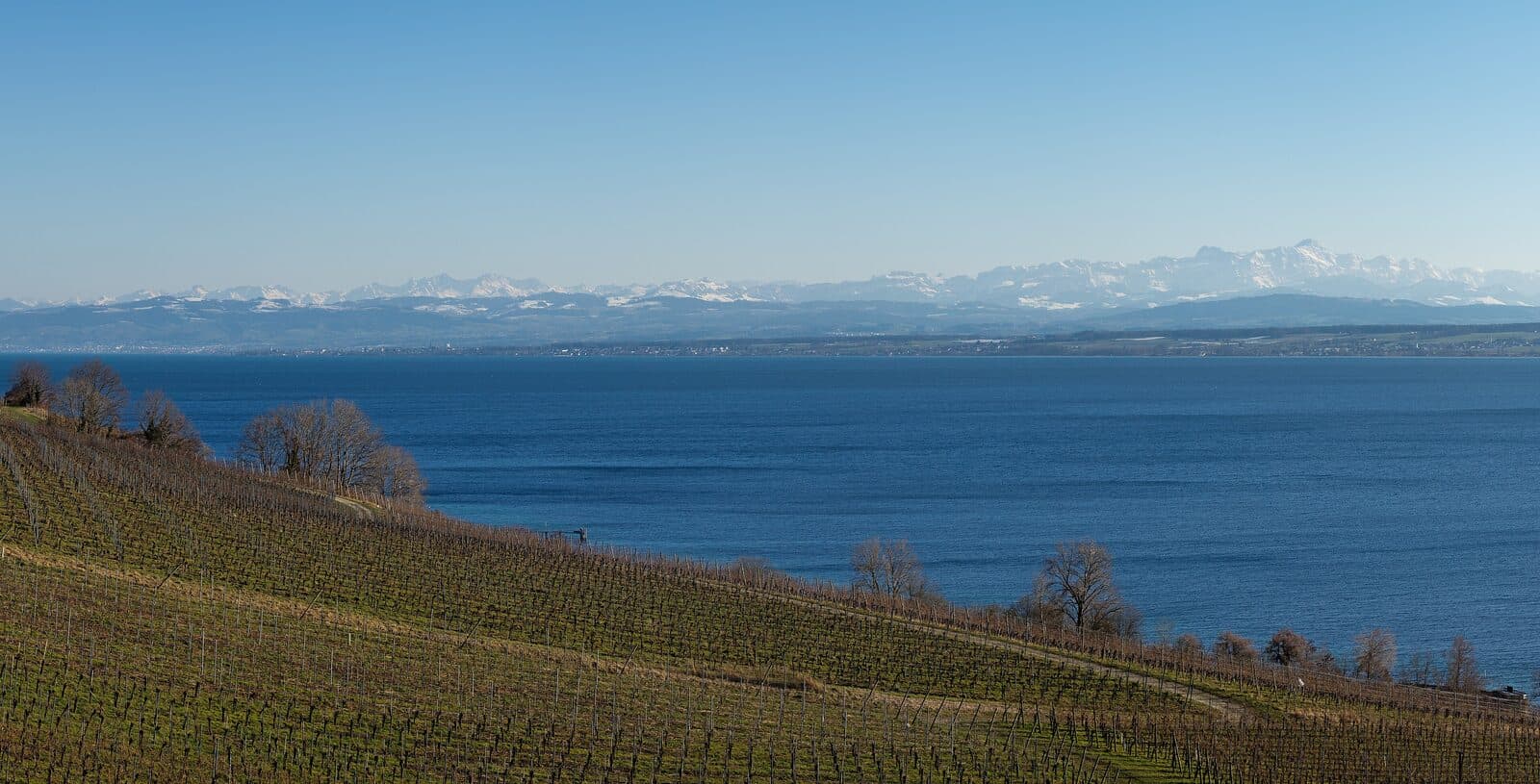
Thurgau is a German-speaking canton in eastern Switzerland on Lake Constance, on the border with Germany. Its capital is Frauenfeld. Roughly one quarter of residents are foreign nationals, close to the Swiss average; current figures are published by the Federal Statistical Office (FSO) and the cantonal statistical office.
Known as the "apple canton" for its agriculture, Thurgau also has industry and services and good transport links to the Zurich and St. Gallen areas. Cross-border work with Germany plays a real role in the local job market. Larger municipalities besides Frauenfeld include Kreuzlingen, Arbon, Amriswil and Weinfelden. Rents vary a lot by region and over time; check the FSO, the cantonal statistics or housing portals for current levels.
The migration office
The Migrationsamt des Kantons Thurgau handles all ordinary residence procedures: granting, extending and revoking permits, family reunification, changes of status, and the cantonal steps in naturalisation and asylum coordination.
- Online portal: https://migrationsamt.tg.ch. You can start several steps online, such as extensions, address changes and forms, and depending on the service, book an appointment.
- Address, phone, email, opening hours and public transport: check the official page, which is kept up to date.
The law that applies
Thurgau applies federal law first:
- Federal Act on Foreign Nationals and Integration (FNIA, SR 142.20): work (Art. 18), study (Art. 27), hardship cases (Art. 30 para. 1 let. b), residence and extension (Art. 33), the C permit after ten years (Art. 34 para. 2) or early (Art. 34 para. 4), changing canton (Art. 37), family reunification (Art. 42 to 47), staying after the family breaks up (Art. 50), integration (Art. 58a and 58b), revocation (Art. 62 and 63), and federal approval (Art. 99).
- Ordinance on Admission, Residence and Gainful Employment (OASA, SR 142.201): hardship criteria (Art. 31), language skills (Art. 60 para. 2 and 62 para. 1bis), family reunification deadlines (Art. 73), language proof for an early C (Art. 77d), and cases needing approval (Art. 85 and 86).
- Agreement on the Free Movement of Persons (AFMP, SR 0.142.112.681) and its ordinance (OFMP), for EU/EFTA nationals.
- Asylum Act (AsylA, SR 142.31): allocation to cantons (Art. 27) and free legal advice and representation (Art. 102f).
- Swiss Citizenship Act (SCA, SR 141.0): residence period (Art. 9) and integration (Art. 11 and 12), and the Citizenship Ordinance (SCO, SR 141.01), which sets the language proof (Art. 6 SCO).
- Victim Support Act (VSA, SR 312.5), for victims of offences.
Cantonal law adds the implementing rules on the FNIA, cantonal citizenship law and the law on administrative procedure. Titles and numbers can change, so check the official cantonal collection of laws (Rechtsbuch).
For background, see the FNIA and OASA glossary of terms, the AFMP/OFMP glossary and the Asylum Act glossary.
Processing times
These are rough, non-binding guides. Actual times depend on how complete your file is, the office's workload and how complex your case is. Ask the migration office for the current situation.
| Procedure | Rough guide |
|---|---|
| B permit, first application | usually longer than six weeks |
| B permit, extension | usually shorter than six weeks |
| C permit after ten years (Art. 34 para. 2 FNIA) | around six weeks, depends on the case |
| Early C permit after five years (Art. 34 para. 4 FNIA) | depends on the case |
| Family reunification, third countries (Art. 42 to 47 FNIA) | depends on the case, usually longer |
| Hardship case (Art. 30 para. 1 let. b FNIA, Art. 31 OASA) | much longer, several stages |
If your case needs approval from the State Secretariat for Migration (SEM) (Art. 99 FNIA; Art. 85 and 86 OASA), add several weeks to months. That time is not included above.
Language requirements
The language in Thurgau is German. Language tests are in standard German, not Swiss German.
- Family reunification from a third country: for a B permit, federal law usually requires German at level A1 oral (Common European Framework of Reference, CEFR). Where the law allows, enrolling in a suitable language course is enough instead.
- Early C permit (Art. 34 para. 4 FNIA with Art. 62 para. 1bis and Art. 77d OASA): German at B1 oral and A1 written. For EU/EFTA nationals the AFMP also applies.
The fide certificate in German is accepted, as are the diplomas recognised under Art. 77d OASA, notably telc, Goethe and ÖSD at the required level. Cantonal interpretation can differ on details, so check with the migration office what your case needs.
B, L and C permits
Thurgau follows the federal rules in the FNIA and OASA and the SEM directives:
- L short-term permit: for temporary work or stays. Work admission under Art. 18 FNIA (third countries) or the AFMP (EU/EFTA).
- B residence permit: the most common permit, for work (Art. 18 FNIA), study (Art. 27 FNIA) or family reunification (Art. 42 to 47 FNIA).
- C settlement permit: normally after ten years (Art. 34 para. 2 FNIA), or after five years with successful integration (Art. 34 para. 4 FNIA). The early C is at the authority's discretion. You need the language level above, work or education, respect for public security and order, and respect for the values of the Federal Constitution (Art. 58a FNIA).
Fees follow the cantonal fee tariff in force. Get current amounts from the migration office or its website.
Naturalisation
Ordinary naturalisation has three levels, and you need all three: the federal naturalisation authorisation, citizenship of the canton of Thurgau, and citizenship of your municipality.
Federal requirements (SCA in force since 1.1.2018, and the SCO):
- ten years of residence in Switzerland, with years between ages eight and eighteen counting double (Art. 9 SCA);
- successful integration (Art. 11 and 12 SCA);
- no threat to Switzerland's internal or external security;
- a national language at B1 oral and A2 written (Art. 6 SCO), which in Thurgau means German.
Cantonal and municipal requirements, such as how long you must have lived in the canton, an interview, or a knowledge or integration test, are set by cantonal citizenship law and the rules of your municipality. Because municipalities have autonomy, these can differ. Check the current cantonal law and your municipality's rules. See also the 2018 Swiss Citizenship Act glossary and paths to naturalisation.
Asylum
Asylum is mainly federal. Applications are first handled in a federal asylum centre in the relevant asylum region under the accelerated procedure. If your case moves to the extended procedure, the SEM allocates you to a canton using its distribution key (Art. 27 AsylA), and you then live in that canton under its asylum structures.
Which asylum region and federal asylum centre cover Thurgau, and which body provides legal advice and representation under Art. 102f AsylA, is listed on sem.admin.ch.
Withholding tax
If you work in Thurgau on a B or L permit, tax is usually deducted from your salary (withholding tax), for both federal and cantonal tax. The federal basis is the Federal Act on Direct Federal Taxation (DFTA, SR 642.11), Art. 83 onwards.
- If your gross annual salary is above CHF 120,000, the threshold in the Withholding Tax Ordinance (WTO), you are automatically assessed through a subsequent ordinary assessment (SOA).
- Below that, withholding tax is normally final, but you can request an SOA (Art. 89a DFTA).
- Withholding tax ends when you receive a C permit or marry a Swiss citizen; from then on you are taxed normally.
Tax matters for your permit only indirectly. Large, unpaid debts, including tax debts, can count against you in the integration assessment (Art. 58a FNIA). Debts or a debt-enforcement procedure alone do not lead to automatic revocation; revocation under Art. 62 and 63 FNIA has its own conditions. For tax questions, ask the cantonal tax office or a tax adviser.
Where to get help
For advice on your own case, contact a lawyer registered in a cantonal bar register, a legal advice service for asylum seekers, or the competent cantonal or municipal authority.
Related pages
- German-speaking standard cluster
- The B residence permit, the C settlement permit, the L short-term residence permit, the G cross-border commuter permit, the Ci permit
- The N residence permit, provisional admission (F permit), protection status S
- Divorce and residence permit (Art. 50 FNIA)
- Proof of language skills for permit and naturalisation
- Change of canton (Art. 37 FNIA)