
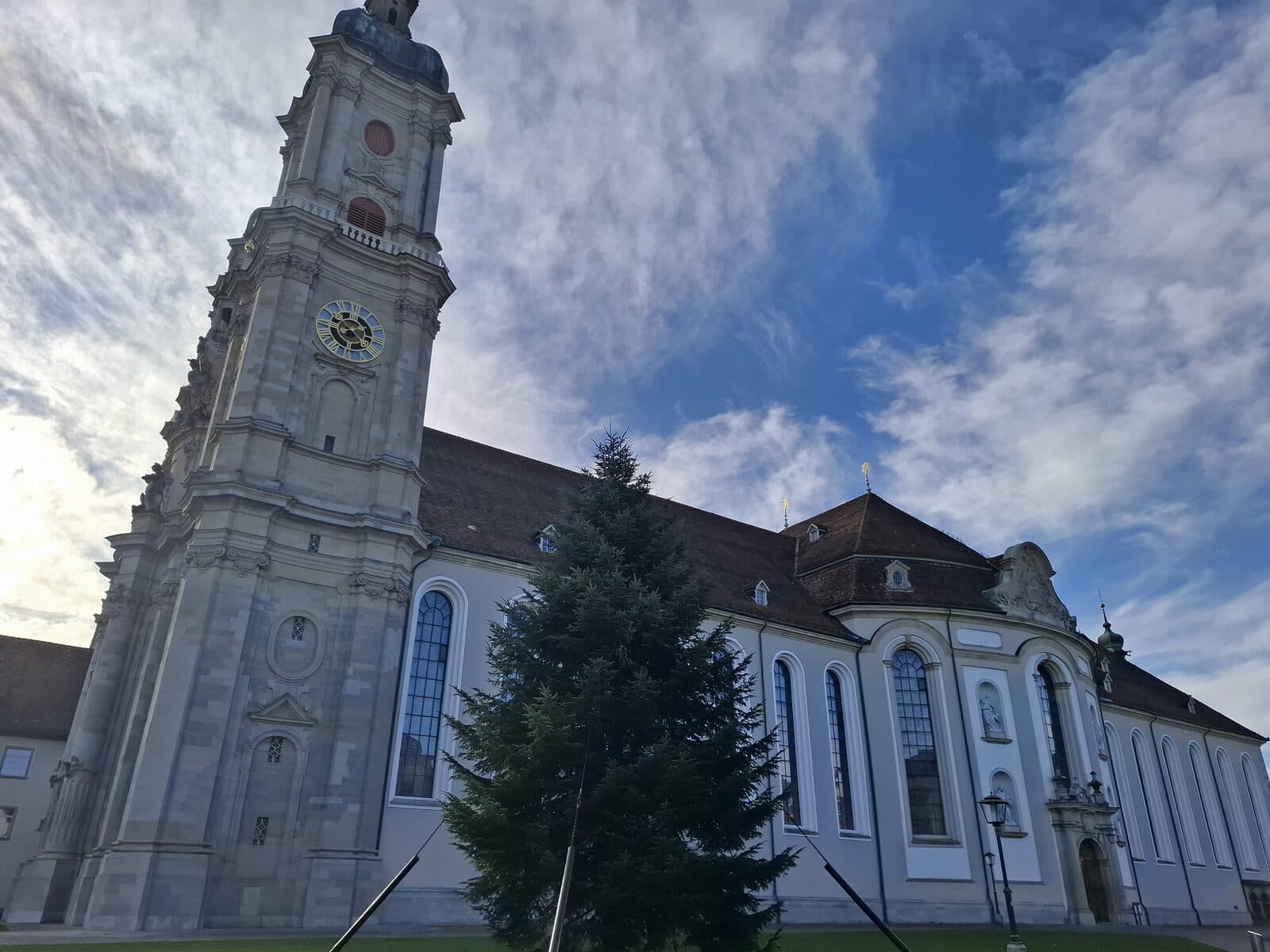
In the Canton of St. Gallen, residence permits are handled by the Migrationsamt des Kantons St.Gallen, the cantonal migration office. St. Gallen is German-speaking, so your language proof must be in German. The law is the same federal law as in every canton; this page explains the local office and its practice.
In short
- Your authority: the Migrationsamt, https://www.sg.ch/migrationsamt, which also has an online portal. Check the address, phone, email and opening hours there.
- Processing time: around 6 weeks for common procedures, as a rough guide. SEM approval can add weeks to months.
- Language: standard German. Family reunification from a third state usually needs oral A1; an early C permit needs oral B1 and written A1.
- Naturalisation: ten years in Switzerland under federal law, plus cantonal and communal residence periods.
- Tax at source applies if you work without a C permit. Above CHF 120,000 gross a year, a full tax return is mandatory.
St. Gallen at a glance
St. Gallen is a populous canton in eastern Switzerland. Its capital is the city of St. Gallen, known for its UNESCO-listed Abbey precinct. The economy is broad, with industry, services, education and research, and the University of St. Gallen (HSG) draws international students and researchers. Roughly a quarter of residents do not hold Swiss citizenship, in the medium to upper range nationally. For current, dated figures, see the Federal Statistical Office (FSO) and the canton's statistics.
Larger municipalities include St. Gallen, Rapperswil-Jona, Wil, Gossau and Rorschach. Rents vary a lot by municipality and location. The canton runs an integration-promotion programme.
Your migration office
The Migrationsamt handles residence matters for people living in the canton: granting, renewing and revoking permits, family reunification and changes of status. It also prepares naturalisation steps at cantonal level and coordinates asylum matters.
- Website and online portal: https://www.sg.ch/migrationsamt. You can start some steps online, such as renewals, address changes and some forms, and possibly book appointments. The portal shows what is currently available.
- Address, phone, email, opening hours and public transport: on the same website.
- List of all cantonal migration offices: the State Secretariat for Migration (SEM), https://www.sem.admin.ch
The law that applies
St. Gallen applies federal law, like every canton:
- Federal Act on Foreign Nationals and Integration (FNIA, SR 142.20): work (Art. 18), study (Art. 27), hardship cases (Art. 30 para. 1 let. b), residence and renewal (Art. 33), the C permit (Art. 34 para. 2) and early C permit (Art. 34 para. 4), change of canton (Art. 37), family reunification (Art. 42 to 47), staying after a marriage ends (Art. 50), integration (Art. 58a and 58b), revocation and expiry (Art. 62 and 63) and federal approval (Art. 99).
- Ordinance on Admission, Residence and Gainful Employment (OASA, SR 142.201): hardship criteria (Art. 31), language skills (Art. 60 para. 2 and 62 para. 1bis), family reunification deadlines (Art. 73), language proof for early settlement (Art. 77d) and approval cases (Art. 85 and 86).
- Agreement on the Free Movement of Persons (AFMP, SR 0.142.112.681) and its implementing ordinance (OFMP, SR 142.203) for EU/EFTA nationals.
- Asylum Act (AsylA, SR 142.31): distribution among cantons (Art. 27) and legal advice and representation (Art. 102f).
- Swiss Citizenship Act (SCA, SR 141.0): residence (Art. 9) and integration (Art. 11 and 12). The language rules are in a separate text, the Citizenship Ordinance (SCO, SR 141.01), Art. 6.
- Victim Support Act (VSA, SR 312.5) for victim protection.
The canton's own law deals mainly with organisation, procedure and who decides: its implementing law for the FNIA, its citizenship law and its administrative procedure law. You can find them in the canton's official systematic compilation of laws.
For the federal law in depth, see the FNIA and OASA glossary, the AFMP/OFMP glossary and the Asylum Act glossary.
How long it takes
These are non-binding guides. Time depends on your file, how complete your documents are, the office's workload and your case. The Migrationsamt's own current information is what counts.
| Procedure | Rough guide |
|---|---|
| First B permit | usually longer than about 6 weeks |
| B renewal | usually shorter than about 6 weeks |
| Ordinary C permit (after 10 years, Art. 34 para. 2 FNIA) | about 6 weeks, depends on the case |
| Early C permit (after 5 years, Art. 34 para. 4 FNIA) | depends on the case |
| Family reunification (third state, Art. 42 to 47 FNIA) | depends on the case, usually longer |
| Hardship case (Art. 30 para. 1 let. b FNIA with Art. 31 OASA) | much longer, several stages |
If the SEM must approve the cantonal decision (Art. 99 FNIA with Art. 85 and 86 OASA), that is not included above and can add weeks to months.
Language requirements
The language of proof is standard German; Swiss German is not tested. The minimum levels come from federal law (Art. 60 para. 2, 62 para. 1bis and 77d OASA) and the SEM directives.
- Family reunification from a third state: for a B permit, usually oral A1 in German on the Common European Framework of Reference for Languages (CEFR). In some cases, proof that you have registered for a language course is enough.
- Early C permit (Art. 34 para. 4 FNIA with Art. 62 para. 1bis and Art. 77d OASA): oral B1 and written A1.
How these levels apply to EU/EFTA nationals and to third-state nationals follows the SEM directive in force when you apply, and it can change.
The fide certificate in German is accepted, as are the diplomas listed in Art. 77d OASA, such as telc, Goethe and ÖSD certificates at the right level. Check with the Migrationsamt which proofs it accepts for you.
Permits: L, B and C
St. Gallen follows the federal FNIA, OASA and SEM directives.
- L short-term permit: for temporary work and stays with an end date. Work admission under Art. 18 FNIA (third states) or the AFMP and OFMP (EU/EFTA).
- B residence permit: the most common permit, for work (Art. 18 FNIA), study (Art. 27 FNIA) or family reunification (Art. 42 to 47 FNIA), each with its federal conditions.
- C settlement permit: normally after ten years (Art. 34 para. 2 FNIA), or early after five years if you are well integrated (Art. 34 para. 4 FNIA). Early C is at the canton's discretion. The integration assessment (Art. 58a FNIA) typically looks at the higher language level above, earning your living without lasting social assistance, orderly finances and respect for public security and order. Only the authority decides whether you meet them.
Fees apply. The current fee tariff is on the Migrationsamt website.
Naturalisation
Ordinary naturalisation has three levels, and you need approval at all three: the federal naturalisation approval under the SCA and SCO, citizenship of the Canton of St. Gallen under cantonal law, and citizenship of your municipality.
Federal requirements
The SCA, in its version in force since 1.1.2018, and the SCO apply. You need ten years' residence in Switzerland (Art. 9 SCA), successful integration and familiarity with Swiss life (Art. 11 and 12 SCA), and you must not endanger Switzerland's internal or external security. Language is set in the ordinance: oral B1 and written A2 in a national language, in St. Gallen German (Art. 6 SCO).
Cantonal and municipal requirements
The canton and the municipality each require a minimum period of residence on their territory. Municipal practice, any interview and any knowledge or integration test follow from cantonal citizenship law and the municipality's rules, and they vary. Check the canton's compilation of laws and ask your municipality.
See the glossary on the 2018 Citizenship Act (SCA) and naturalisation in Switzerland.
Asylum
Asylum is mainly federal. Applications are first handled in a federal asylum centre of the asylum region (accelerated procedure). If yours moves to the extended procedure, you are allocated to a canton using the SEM's distribution key (Art. 27 AsylA), and you then live in that canton under its asylum coordination.
Which asylum region and federal centre serve St. Gallen, and which service provides legal advice and representation under Art. 102f AsylA, are published by the SEM at https://www.sem.admin.ch.
Tax at source and your permit
If you work on a B or L permit without a settlement permit, whether you are from the EU/EFTA or a third state, your employer usually deducts tax at source from your wages. It is a cantonal tax under federal tax harmonisation; the St. Gallen cantonal tax office publishes the tariff. If your gross earned income is above CHF 120,000 a year, you must file a full tax return (subsequent ordinary assessment). Below that, tax at source is usually final, but you can ask for a full assessment. When you get a C permit or marry a Swiss citizen, tax at source ends and you are taxed normally.
For your permit, tax matters only indirectly. Tax debts or open back-tax assessments do not on their own lead to revocation; Art. 62 and 63 FNIA concern security and public order. Serious debt that you caused yourself can, however, count in the integration assessment (Art. 58a FNIA) and affect a renewal or early C permit. The authority weighs everything together.
For advice on your own case, contact a lawyer entered in the cantonal bar register, an asylum legal advice service, or the cantonal or municipal authority. For tax questions, ask the cantonal tax office or a tax adviser.