MIDI Bern, bilingual canton, federal administration, federal personnel practice.
Last reviewed
03.06.2026
Statute as of
01.01.2024
Statute citations
6 linked
Reading time
42 min read
As of: 01.06.2026 · Snapshot
Canton of Bern — Immigration Practice (cantonal focus)
1. Overview — the Canton of Bern in the context of immigration law
Frequently asked
4 answers on this topic.
Concrete questions people ask about Bern.
At the Migration Service of the Canton of Bern (MIDI), Eigerstrasse 73, 3011 Bern. Online appointment booking is available. The procedure can be conducted in German or French, as desired (bilingual canton). Prior registration at the local municipality of residence must be completed within 14 days.
Statute citations
6 statute citations, each linked directly.
01Reviewed: Tier A · Info
Kanton Bern — Migration und Eingliederung (Sicherheitsdirektion)
The Canton of Bern is the third largest canton in Switzerland, after Zurich and Vaud. With approximately
one million inhabitants
(as of 2024, Federal Office of Statistics;
VERIFY
2026) and a proportion of around
17 per cent
of people with foreign nationality, the canton has a
below-average
proportion of foreign nationals compared with other cantons – significantly lower than Geneva (around 40%), Basel-Stadt (around 36%) or Zurich (around 27%). In absolute terms, however, around
170,000 people without Swiss citizenship
live in the Canton of Bern, which represents a numerically substantial migrant population.
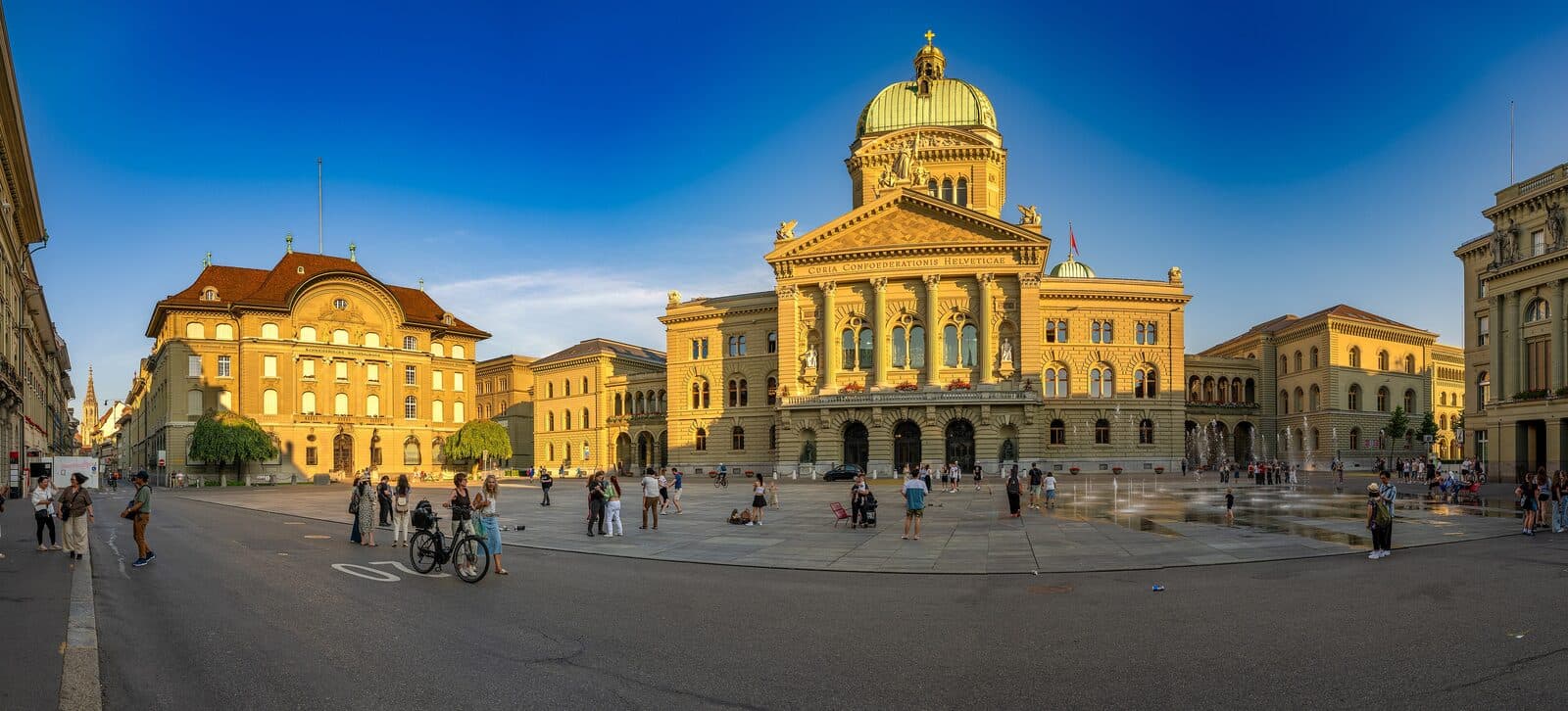
The Bern configuration differs structurally from the Geneva and Zurich configurations: Bern is the federal city (de facto capital of the Swiss Confederation, without formal capital status) and houses the Federal Assembly, the Federal Council and the central federal administrations. This results in a moderate but significant presence of diplomatic personnel (although not on the scale of Geneva's international organisations), federal employees and their families. Structurally, however, the Bern migrant population is primarily composed of a broad third-country and EU/EFTA population: family reunification, employment in Bern's economic clusters (pharmaceutical industry in Bern and Burgdorf, mechanical engineering in the Bernese Oberland, tourism in Interlaken and the Jungfrau region, watch industry in the Bernese Jura, agriculture in the rural regions), studies at the University of Bern and the Bern University of Teacher Education.
Another distinctive feature of the Canton of Bern: it is officially bilingual. The main part of the canton is German-speaking (Bernese German as the language of everyday use, standard German as the official language), while the Bernese Jura is French-speaking in the northwest. In addition, there is the bilingual region of Biel/Bienne (the city of Biel) with a mixed German-French population and corresponding administrative practice. This linguistic situation substantially shapes Bernese migration practice – in terms of language certificates, language of proceedings, correspondence with the authorities and in the choice of the responsible local point of contact.
The competent cantonal authority for all residence law procedures is the Migration Office of the Canton of Bern (MIDI), which reports to the Directorate for Security of the Canton of Bern (SID).
Main Migration Office of the Canton of Bern (MIDI): Ostermundigenstrasse 99b, 3006 Bern
Telephone: +41 31 633 53 15
E-Mail: midi.info@be.chCounter opening hours: Mon–Fri (VERIFY 2026 — the exact opening hours vary depending on the service area)
Online portal: be.ch/migrationsdienst
For the municipality of residence, City of Bern, the local registration office is also relevant:
Immigration, Migration and Foreigners’ Police Department of the City of Bern (EMF): Predigergasse 5, 3011 Bern
Telephone: +41 31 321 53 00
Function: municipal registration, residence and initial assessment centre for the City of Bern; works closely with MIDI.
1.1 Bernese migrant population in figures
An overview of the Bernese migration structure (as of 2024, VERIFY 2026):
EU/EFTA nationals: a significant proportion of the foreign nationals residing in Bern, namely from Germany, Italy, Portugal, Spain, France, Kosovo (an EU/EFTA non-member state, but traditionally perceived as part of the EU/EFTA area), and Croatia.
Third-country nationals: significant communities from Turkey, Sri Lanka, Eritrea, Somalia, Syria, Afghanistan, as well as from the asylum countries of origin relevant at the time.
B permits: the most common type of permit for permanent residents, in terms of numbers.
C permits: the second most common category for people who have been resident in the canton for a long time.
L permits: Short-term permits for temporary employment, seasonal work (agriculture, tourism, construction) and for students with a limited period of stay.
G permits: Cross-border workers in the Bernese Jura (commuting to France, specifically the Doubs region) as well as on the southern cantonal border.
F and N permits: Asylum procedure scenarios; Bern, as a canton with a large population, is one of the main cantons in the SEM distribution system (Art. 27 AsylA) and also houses the Federal Asylum Centre (BAZ) for the Bern region in Zollikofen.
VERIFY the exact Bernese permit statistics for 2026 with the Federal Office of Statistics or the statistics department of the Canton of Bern (BFS / FINSTAT BE).
2. Legal basis — Federal law and cantonal implementing law
2.1 Applicable Federal Law
In immigration law, the Canton of Bern — like all cantons — primarily applies federal law: the Federal Act on Foreign Nationals and Integration (AIG, SR 142.20), the Ordinance on Admission, Residence and Employment (VZAE, SR 142.201), the Agreement on the Free Movement of Persons (FZA, SR 0.142.112.681) with the associated ordinances, the Asylum Act (AsylG, SR 142.31) and the relevant SEM practice and guidelines. For the legal basis, see framework/fw_aig_vzae_glossary.md, framework/fw_fza_vfp_glossary.md and framework/fw_asylg_glossary.md.
2.2 Cantonal implementing legislation
At cantonal level, the following are particularly relevant:
Implementing Ordinance to the Federal Act on Foreign Nationals and Integration and to the Asylum Act of the Canton of Bern (cantonal AIG/AsylA implementing legislation). The formal designation and the BSG numbering may change; VERIFY the current version for 2026 via belex.sites.be.ch.
Cantonal Citizenship Act (KBüG BE): cantonal implementation of the citizenship procedure under the Swiss Citizenship Act (see section 9).
Cantonal Bar Act (KAG, BSG 168.11): regulates the legal profession in the Canton of Bern, in particular admission to the cantonal bar register and the activities of the supervisory authority (Bern Bar Association). KAG Art. 12 regulates the register, disciplinary proceedings and the waiver of professional secrecy. KAG Art. 32 para. 2 states that the complainant (dénonciateur) in disciplinary proceedings does not have party status.
Administrative Procedure Act (VRPG): cantonal procedural law for proceedings before the cantonal administrative authorities and the Administrative Court.
Cantonal Constitution of the Canton of Bern (KV BE): governs, among other things, bilingualism, the institutional status of the Bernese Jura and fundamental rights.
A consolidated overview of cantonal ordinances relating to migration can be found in framework/fw_cantonal_acts_index.md.
3. Structure of the Bern Migration Office (MIDI)
The MIDI is divided into specialist sections, each dealing with different groups of people and procedures. The following provides a general overview; the exact internal organisation may change and can be verified on be.ch/migrationsdienst.
3.1 General permits (B and L)
Processing of ordinary B residence permits (long-term stay) and L short-term permits for the permanent and non-permanent resident population:
B EU/EFTA in accordance with the AFMP
Third-country national as defined by the Federal Act on Foreign Nationals and Integration (family reunification, gainful employment pursuant to Art. 18 ff. of the Federal Act on Foreign Nationals and Integration, studies pursuant to Art. 27 of the Federal Act on Foreign Nationals and Integration, etc.)
L EU/EFTA and L third-country nationals for temporary stays
Extensions, changes of status, revocations of permits
3.2 C settlement permit
Separate procedure for the granting and renewal of the C settlement permit, including the ordinary granting after ten years (Art. 34 para. 2 AIG) and the early granting after five years in the event of successful integration (Art. 34 para. 4 AIG).
3.3 Family reunification
Specialised processing of family reunification applications under Art. 42 ff. AIG (for Swiss nationals and C permit holders) and Fedlex·Art. 44 AIG (for B permit holders). In an intercantonal comparison, the Bern practice tends to be moderate in the application of the housing and income requirements and largely corresponds to the federal minimum practice.
3.4 Asylum
Processing of asylum applications: preparation and implementation of removal decisions, coordination with the Federal Asylum Centre (BAZ) of the Bern region (Zollikofen site) and with the SEM, extensions and changes of status for N, F, S and B refugee permits, allocation in the extended procedure.
3.5 Naturalisation
Processing of cantonal naturalisation applications, coordination with the municipalities and the Confederation (SEM). See section 9.
3.6 Return counselling
Important distinction (as per ADR-017 F8): The return counselling service of the Canton of Bern is a counselling service specifically for asylum seekers. It should not be confused with the return counselling service of Basel-Stadt (RBS-Basel). The Bern return counselling service is available exclusively to persons from the asylum field: asylum seekers in ongoing proceedings (N permit), persons with provisional admission (F permit) and persons with expired asylum status. It is not available to tourists who have overstayed their permitted stay, third-country nationals who have been lawfully refused entry or persons without an asylum context.
Return counselling provides advice on voluntary return, organises travel documents and travel arrangements, and works with the SEM’s return assistance programmes. VERIFY the current contact details and opening hours for 2026 via be.ch/migrationsdienst.
Anti-Scope (ADR-017 F8): SwissImmigrationPro does not provide a strategy to avoid return counselling or to circumvent removal decisions. Return counselling is a support service in the asylum context, not a tool for ordinary migration management.
4. Key aspects of Bern’s practice — what distinguishes the Canton of Bern in terms of migration law
4.1 Proof of language skills in a bilingual context
The bilingualism of the Canton of Bern has a direct impact on the language proficiency requirements. The official and commonly used language at the place of residence is the determining factor:
In the German-speaking part of the canton (approximately 85% of the population of Bern, namely Bern, Burgdorf, Thun, Interlaken, Bernese Oberland, Emmental), proof of language proficiency in German is required.
In the French-speaking Bernese Jura (Jura bernois: districts of Moutier, La Neuveville, Courtelary), proof of language proficiency is required in French.
In the bilingual region of Biel/Bienne, depending on the municipality of residence and the person’s official language, proof of language proficiency is accepted in German or French.
For the issuance of a B permit in family reunification cases from a third country, the MIDI requires proof of language skills at level A1 (oral) (GER) in the official language of the place of residence. For the early issuance of the C settlement permit after five years (Art. 34 para. 4 AIG in conjunction with Fedlex·Art. 60a VZAE), the Bern practice requires a level of B1 (oral) and A1 (written) in German or French.
The fide certificate in German or French is accepted as an officially recognised proof. In addition, the diplomas and certificates mentioned in Fedlex·Art. 77d VZAE apply (telc, Goethe, ÖSD; DELF, DALF, TCF, TEF at the corresponding level). In the context of Bern, the Standard German or Standard French version of the language certificate is decisive; Bern German is not relevant for the examination.
In bilingual proceedings — for example, if a person lives in the Bernese Jura but works in the German-speaking part of the canton, or vice versa — correspondence and certain procedural steps can, in practice, be conducted in both official languages. The applicant should explicitly state their preferred language for the proceedings when submitting the application. VERIFY the exact requirements of the Bernese practice in 2026.
4.2 Integration agreement — moderate Bernese practice
According to Art. 58a and Art. 58b LEI/LStrI/FNIA, the canton may conclude an integration agreement or issue an integration recommendation with third-country nationals who have integration deficits. In an intercantonal comparison, the Bern practice lies between Zurich (selective) and Vaud (systematic): it uses the instrument of the integration agreement moderately – more often than Zurich, but less systematically than Vaud. An integration agreement in Bern typically applies when, during an extension, deficits are identified in the areas of language, employment or respect for public safety and order.
4.3 Hardship case under Art. 30 para. 1 lit. b LEI/LStrI/FNIA
The Bern hardship case practice is considered to be moderately standardised in comparison with other cantons. It largely follows the federal criteria set out in Fedlex·Art. 31 VZAE: integration (language, employment, social integration), family circumstances, financial situation, length of stay, state of health and prospects of reintegration in the country of origin. The requirement for SEM approval under Fedlex·Art. 99 AIG must be taken into account and can substantially extend the overall duration of a hardship case procedure.
Unlike the Geneva approach, the Canton of Bern does not have its own historical regularisation operation in the format of Operation Papyrus (Geneva 2017–2018). Undocumented situations in the Canton of Bern are dealt with individually and on a case-by-case basis.
Anti-Scope: SwissImmigrationPro does not provide strategic advice on how to argue a hardship case. The case-specific presentation of evidence and interpretation of the indefinite legal terms are part of legal practice and should be handled via the Bern Bar Association (registration in the cantonal bar register; see section 11).
4.4 C settlement permit applied for early
The early granting of the C settlement permit after five instead of ten years (Art. 34 para. 4 AIG) requires successful integration and is at the discretion of the cantonal authority. According to available indicators, the practice in Bern is moderately restrictive: the approval rate is around 20 per cent of applications, according to internal observations – slightly higher than in Geneva (~10–20%), comparable to Zurich (~15–25%). VERIFY the current rate for 2026 – reliable statistical sources are not regularly published by the MIDI. Key factors include enhanced language skills (B1 oral, A1 written), economic independence without receiving social assistance, no debts and no entry in the criminal record.
4.5 Family reunification — Bernese interpretation
In cases of family reunification from third countries (Art. 43–47 AIG), MIDI examines the cumulative requirements: sufficient income, suitable accommodation, no dependence on social welfare, language skills, and integration. Bern applies the federal legal standards. When assessing the size of the accommodation, Bern’s practice refers to the SKOS standards; the Bern housing market is more moderate than Geneva, Zurich and Zug in the intercantonal comparison, which tends to make it easier to meet the requirements in practice (although this must always be assessed in each individual case).
For the purposes of family reunification involving children, the strict age limit of 12 years applies (Art. 47 para. 1 AIG in conjunction with Fedlex·Art. 73 VZAE), or the deadline for family reunification of five years from the date on which the right to reunification arises. In the case of late applications for family reunification, the MIDI will examine whether "important family reasons" within the meaning of Art. 47 para. 4 AIG exist. The practice is based on individual cases; the case law of the Federal Supreme Court on family hardship (in particular BGE 137 I 284 and subsequent case law) is decisive. VERIFY the current Bern interpretation practice for 2026.
4.6 Practice in cases of separation and divorce
In the event of separation or divorce from Swiss citizens or C permit holders, Art. 50 LEI/LStrI/FNIA applies. The Bern practice carefully examines the requirements: three years of marital cohabitation and successful integration (Art. 50 para. 1 lit. a LEI/LStrI/FNIA) or important personal reasons (Art. 50 para. 1 lit. b LEI/LStrI/FNIA, in particular domestic violence). In cases of domestic violence, coordination with the Bern victim support structures and the Bern women's shelters (Bern, Biel, Thun/Bernese Oberland) should be taken into account. For a more detailed explanation, see life-events/le_separation_divorce.md (if available).
4.7 Bern as the federal capital — moderate diplomatic presence
Unlike Geneva, which is significantly shaped by the IO sector and the carte de légitimation, the diplomatic presence in Bern is substantial, but moderate. In Bern, the bilateral embassies and representations of states accredited to the Swiss Confederation are located (around 100 embassies and missions), and in addition, the central federal authorities, the Federal Council and the Federal Parliament are located in Bern. Carte-de-légitimation arrangements do exist, but to a significantly lesser extent than in Geneva. The MIDI coordinates IO-related procedures with the EDA Protocol in Bern, if required. The Ci permit exists in the Canton of Bern, but is not a core competence, as in Geneva.
5. Bernese Jura — Specific features of a French-speaking part of a canton
5.1 The Bernese Jura: an overview
The Bernese Jura (Jura bernois) comprises the districts of Moutier, La Neuveville and Courtelary, with approximately 53,000 inhabitants (as of 2024, VERIFY 2026). It is the only contiguous French-speaking part of an otherwise predominantly German-speaking canton in Switzerland. The main towns are Moutier, Saint-Imier, Tavannes, Tramelan and La Neuveville. The economic structure is characterised by the watch industry and micromechanics, with locations of numerous watch manufacturers and suppliers.
5.2 Language and procedural practice
In the Bernese Jura, the official language and language of proceedings is French. Proof of language proficiency must be provided in French (see section 4.1). Correspondence with MIDI is generally conducted in French for residents of the Bernese Jura; however, the applicant may specify the language of proceedings within the framework of the cantonal bilingualism regulations.
5.3 Moutier Transfer 2026 — Transfer to the Canton of Jura
A development of significant legal and political importance in recent years has been the transfer of the municipality of Moutier (approximately 7,500 inhabitants) from the Canton of Bern to the Canton of Jura. The vote by the eligible voters of Moutier on 28 March 2021 resulted in a narrow majority in favour of the change of canton; the concordat between the cantons of Bern and Jura, as well as the federal approval, were subsequently negotiated. The effective date of the change is currently scheduled for 1 January 2026. VERIFY the current status of the change and the exact transition arrangements for 2026 with the cantons of Bern and Jura, as well as the Federal Office of Justice (BJ).
For persons residing in Moutier, the change of canton means the following from a migration law perspective:
Before the changeover date (with retroactive effect for dates that have not yet taken effect): MIDI Bern is responsible; Bernese practice and Bernese cantonal law apply.
After the changeover date: Jurisdiction lies with the Migration Office of the Canton of Jura (Service de la population, SPOP-JU); application of Jura’s practice and Jura’s cantonal law.
Specifically, the permit (B, C, L, Ci, F, N, S) remains valid – the change of canton does not result in the loss of the residence status. For ongoing procedures (family reunification, early C permit, hardship case), the principle of continuation of files applies: procedures that were initiated before the transfer date at MIDI Bern will generally be continued by MIDI Bern to avoid duplication; procedures that need to be initiated after the transfer date will fall under the jurisdiction of SPOP-JU. VERIFY the exact transition arrangements for 2026 – the cross-cantonal coordination is regulated in a transitional agreement, the details of which need to be clarified.
Anti-Scope: SwissImmigrationPro does not provide advice on choosing a place of residence in the context of the Moutier changeover. A change of residence is a personal life decision and not a tool for optimising immigration law.
5.4 Advice centres in the Bernese Jura
For French-language advice in the Bernese Jura, there are specialised contact points available:
CSP Berne-Jura (Protestant Social Centre) — French-speaking social and asylum counselling service for the Bernese Jura region. VERIFY address and contact details in 2026.
BCJ Caritas Suisse / Caritas Jura — Advice centre located in Moutier: Rue Centrale 59, 2740 Moutier (French-speaking, providing advice on asylum matters in the Bernese Jura and the Canton of Jura). VERIFY validity until 2026.
Women's advice centres and cantonal offices with French-language skills (see section 13).
6. Asylum in Bern
6.1 Federal Asylum Centre (FAC) of the Bern Region
Bern is the location of a federal asylum centre (FAC) for the Bern region, operated by the SEM (location mainly in Zollikofen near Bern; VERIFY in 2026 whether further branch offices are active). Phase 1 of the accelerated asylum procedure according to Art. 26b ff. AsylA takes place in the FAC. Within the FAC, the initial interview is conducted, federal legal assistance is provided, and either a ruling is issued (with a subsequent appeal period and possible removal) or the procedure is transferred to the extended procedure.
6.2 Extended procedure — cantonal allocation
If an asylum application is not decided within phase 1 and is transferred to the extended procedure (Art. 26d AsylA), the allocation to a canton is made according to the distribution key of the SEM (Art. 27 AsylA). Bern, in accordance with its population size, takes on a substantial share of the extended procedures. During the extended procedure, the asylum-seeker lives in the Canton of Bern, is registered there with the authorities and is subject to the cantonal asylum coordination structure (asylum coordination of the cantonal security directorate); the legal assistance typically changes from the federal legal aid service to a cantonal legal advice centre.
6.3 Legal advice centres for asylum seekers in Bern
The contact points active in Bern, which have been mandated by the SEM in accordance with Art. 102f of the Asylum Act or recognised as advisory centres, include:
Bern Legal Advice Centre for People in Need (RBS) — Eigerplatz 5, 3007 Bern; +41 31 385 18 20. Established legal advice service for asylum seekers and persons in precarious immigration situations; integrated into the national OSAR/SFH structure.
Solidaritätsnetz Bern (Solinetz) — Quartiergasse 12, 3013 Bern. A civil society support network focusing on undocumented migrants and those with precarious immigration status; it works closely with RBS and Caritas.
CSP Berne-Jura (Centre social protestant) — French-language advisory service for the Bernese Jura and the bilingual region of Biel/Bienne (see section 5.4).
BCJ Caritas Suisse pour le Jura bernois — Rue Centrale 59, 2740 Moutier; mandated for the Bernese Jura, French-speaking region.
Caritas Bern — German-speaking counselling centre for the main part of the canton.
Swiss Refugee Council (SFH/OSAR) — nationwide umbrella organisation based in Bern; national coordination of the RBS mandates.
A complete and up-to-date list of the designated RBS centres can be found on the website of the Swiss Refugee Council (osar.ch). VERIFY the current RBS list for 2026.
6.4 Unaccompanied minor asylum seekers (UMA/MNA)
In the Canton of Bern, a Central Task Force for Asylum within the cantonal Department of Security is responsible for unaccompanied minor asylum seekers (UMA / mineurs non accompagnés MNA), coordinating the guardianship arrangements (legal representation by the Child and Adult Protection Authority KESB), the educational and vocational integration, and the specific socio-educational support. For a more detailed explanation, see framework/fw_asylg_glossary.md section UMA/MNA.
For a more detailed explanation of asylum law in general, see framework/fw_asylg_glossary.md.
7. Duration of proceedings and Bern guidelines
The typical processing times at MIDI are presented here as guidelines and may vary considerably depending on the individual case, the completeness of the documents, the workload of the relevant section and the complexity of the case. VERIFY the current official SLA figures for MIDI 2026 on be.ch/migrationsdienst.
Procedure
Estimated duration
B initial application (family reunification, application for employment)
6–12 weeks
B extension
4–8 weeks
C application (ordinary, after 10 years)
8–14 weeks
C application (early, Art. 34 para. 4 LEI/LStrI/FNIA, after 5 years)
8–16 weeks
Family reunification (third-country national)
8–16 weeks
Hardship case Art. 30 para. 1 lit. b LEI/LStrI/FNIA
9–15 months
Application for naturalisation (municipal + cantonal + federal)
18–36 months (total procedure)
Appeal procedure, Administrative Court of Bern
6–18 months
Note: The SEM’s approval of cantonal preliminary decisions (Fedlex·Art. 99 AIG) is not included in the above-mentioned guidelines and may take additional weeks or months in cases requiring approval.
7.1 Factors influencing the length of the procedure
Completeness of files: Incomplete applications are usually answered with a request for further information, which can take several weeks.
SEM approval requirement: In cases where approval is required (Art. 85 para. 2 VZAE, Fedlex·Art. 86 VZAE), the total duration is extended.
Submission of proof of language proficiency: If language certificates are only obtained after the application has been submitted, the procedure is effectively suspended until the certificates are submitted.
Criminal record and security checks: In the case of individuals with stays in several countries, or when criminal record checks are required from third countries, the process may take several months longer.
Bilingual coordination: In cases where procedures need to be coordinated between the German-speaking part of the canton and the Bernese Jura (for example, family reunification involving a change of residence across the language border), additional internal coordination may take time.
EMF preliminary assessment in the City of Bern: For places of residence in the City of Bern, the municipal preliminary assessment is carried out by the EMF (see section 1) before the file is forwarded to the MIDI. This is standard practice and is included in the guideline.
7.2 Options for accelerating the process
A formal acceleration procedure is not provided for by MIDI. In practice, it is effective in justified cases:
Written inquiry regarding the status of the procedure after the expiry of the relevant benchmarks.
Note on particular urgency (e.g. start of employment with a deadline in the contract, children's school enrolment, medical treatment)
Appeal against denial or delay of justice to the Administrative Court of the Canton of Bern, pursuant to VRPG, if there is a disproportionate delay — recommended as a last resort and with legal representation.
Anti-Scope: SIP does not provide a template for expedited processing requests or complaints regarding legal delays. These fall within the scope of legal practice.
8. Local voting rights in Bern — the Bern exception
Like the Canton of Zurich, the Canton of Bern does not grant municipal voting rights to foreign nationals at the cantonal or municipal level. Even C permit holders with long-term residence in Bern do not have the right to vote or stand for election. In the Canton of Bern, the right to vote is linked to Swiss citizenship.
Comparable regulations granting municipal voting rights to foreign nationals exist in the cantons of Jura, Neuchâtel, Vaud, Fribourg (at the request of the municipality), Geneva and Basel-Stadt (limited) — but not in Bern.
This situation means that, in migration counselling, naturalisation is the only way for third-country nationals and EU/EFTA nationals who have been resident in Bern for many years to acquire the right to participate in political life in Switzerland – which makes the application for Swiss citizenship in Bern highly relevant (Section 9).
VERIFY the current political situation in 2026 — according to current information, neither a cantonal popular initiative nor a parliamentary proposal to introduce municipal voting rights is at an advanced stage.
9. Naturalisation in Bern
9.1 Three-stage procedure
Naturalisation in Switzerland follows a three-stage procedure: federal (approval by the Confederation under the Swiss Citizenship Act/Swiss Citizenship Ordinance, SCA/SCA-O), cantonal (Swiss citizenship of the Canton of Bern under the cantonal Swiss Citizenship Act, KBüG BE) and communal (Swiss citizenship of the municipality of residence). All three levels must be approved cumulatively.
9.2 Federal legal requirements
At the federal level, the requirements of the Swiss Citizenship Act (SCA, in force since 1 January 2018) and the Swiss Citizenship Ordinance (SCO) apply: ten years of residence in Switzerland (Art. 9 SCA), successful integration (Art. 12 SCA), proof of language skills B1 orally and A2 in writing in one of the national languages (Art. 6 SCO; in Bern: German or French depending on the region of residence), and no threat to internal or external security. For a more detailed legal explanation, see framework/fw_bug_2018_glossary.md.
9.3 Cantonal requirements — cantonal standard practice
At cantonal level, the Bern Cantonal Citizenship Act (KBüG BE) generally requires a multi-year residence in the Canton of Bern as well as in the respective municipality of residence (typically two to five years, depending on the municipal regulations). The Bern practice is considered cantonally standardised in the intercantonal comparison: the Bern Cantonal Citizenship Act (KBüG BE) and the associated cantonal ordinance set the framework within which the municipalities operate. This means that the heterogeneity between the Bern municipalities is less than in some other cantons.
9.4 Local Hearing — Variable Practice
In numerous municipalities in the Canton of Bern, a municipal hearing (or a "naturalisation commission") continues to be part of the procedure, albeit in a more structured form: standardised questionnaires on history, geography and civics, supplemented by a personal interview on integration, background and place of residence. The practice in Bern is variable here: some municipalities conduct the hearing systematically, while others partially forgo it or modernise the procedure. VERIFY the exact municipal practice in 2026 for each municipality — the regulations are municipality-specific.
9.5 Cantonal Knowledge and Integration Test
At cantonal level, a knowledge test (on the history, geography and political system of Switzerland and the Canton of Bern) may be applied. In addition, proof of language skills (B1 oral, A2 written in the respective official language of the region of residence) and a criminal record extract are required. VERIFY the current Bern test practice for 2026 — the details are regulated in the KBüG and the cantonal ordinance and may be subject to change.
For a more detailed legal explanation of the Swiss Citizenship Act 2018, see framework/fw_bug_2018_glossary.md.
Anti-Scope: SwissImmigrationPro does not provide guidance on optimising citizenship strategies. In particular, SIP does not offer recommendations as to which municipality in the Canton of Bern would make an application "easier" – such advice would be a classic example of anti-canton shopping or anti-municipality shopping (see ADR-014).
10. Tax status and withholding tax in Bern
In an intercantonal comparison, Bern is one of the cantons with high taxes, with a tax burden significantly above the Swiss average. The cantonal and municipal tax burden also varies between the individual municipalities of Bern (tax assessment). As the cantonal capital, the city of Bern has a comparatively high municipal tax rate; rural municipalities in the Bernese Mittelland and Oberland are in some cases more favourable.
10.1 Source tax for holders of B residence permits
Both third-country nationals holding a B permit and EU/EFTA nationals holding a B permit without a C settlement permit are generally subject to withholding tax (tax deducted at source) in accordance with Art. 83 ff. of the Federal Act on Direct Taxation (DBG) and Art. 32 ff. of the Federal Act on Harmonised Taxation (StHG). If the annual gross income exceeds CHF 120,000, a subsequent ordinary tax assessment (NOV) is carried out. For lower incomes, the withholding tax is generally treated as final, although a NOV can be carried out upon request (Art. 89a DBG). Upon obtaining a C settlement permit or upon marrying a Swiss citizen, the withholding tax obligation ceases and the ordinary tax assessment applies.
10.2 Anti-Scope
The Bern withholding tax is enforced by the Tax Administration of the Canton of Bern (SVK BE) in cooperation with the municipalities. From a migration law perspective, the withholding tax is relevant in that excessive withholding tax debts or subsequent tax assessments may, in rare cases, have an impact on the immigration status (indebtedness as an obstacle to an extension or permit).
Anti-Scope: SwissImmigrationPro is not a tax advisory service. For specific questions regarding withholding tax, the lump-sum taxation, tax status optimisation or double taxation issues, please consult the tax administration of the Canton of Bern or a qualified tax advisor.
11. Supervision of lawyers in the Canton of Bern
For the ADR-013 Bar Pre-Clearance scenario, the supervisory authority for the lawyers of the Canton of Bern is highly relevant. It is responsible for the professional supervision of the lawyers registered in the Bern cantonal bar register, based on the Cantonal Bar Act (KAG, BSG 168.11) and the Federal Act on the Free Movement of Lawyers (LLCA, SR 935.61).
11.1 Bern Bar Association (KAG Art. 12 ff.)
In the Canton of Bern, the Bern Bar Association acts as the supervisory authority within the meaning of the LLCA and the KAG. It maintains the cantonal bar register, is responsible for disciplinary proceedings against registered lawyers, and provides opinions on applications for waiver of professional confidentiality (KAG Art. 12). According to KAG Art. 13, the Bar Association has nine members and operates bilingually (German/French) to reflect the bilingualism of the canton.
KAG Art. 32 para. 2 states that the reporting party (dénonciateur) does not have party status in disciplinary proceedings. This provision is relevant in the context of the SIP: persons who submit a complaint against a lawyer are not themselves a party to the proceedings and therefore do not have any party rights (access to the file, right of appeal in the broader sense).
11.2 Central Office for Supervision Matters
The supervisory authority’s operational office is organised within the Central Office of Justice or the relevant directorate; the contact point for matters relating to legal supervision can be reached via zsg.justice.be.ch or directly via the justice administration of the Canton of Bern. VERIFY the current contact details for 2026.
11.3 Berne Bar Association (BAV)
In addition, the Bernese Bar Association (BAV) exists as a private professional organisation for lawyers in Bern. Membership of the BAV is not compulsory, but it is widely practised. The BAV publishes a public register of its members.
11.4 Relevance for SIP — Preliminary ruling practice according to ADR-013
If SwissImmigrationPro, as part of its business model, makes lawyer-specific references, recommendations or referrals, prior legal clarification must be obtained from the Bern Bar Association in the form of a preliminary ruling in the Canton of Bern. This serves both to protect the interests of clients and to ensure compliance with the professional rules under LLCA and the Federal Act on Debt Collection and Enforcement.
Anti-Scope: SIP is not a law firm and does not replace legal advice. The Bern Bar Association is not a counselling centre for clients, but a professional supervisory authority for lawyers.
12. Appeal proceedings against MIDI decisions
A decision by the MIDI (refusal of a permit, revocation, removal, negative decision on a hardship case, etc.) is not final. Cantonal procedural law and federal law provide for a multi-stage legal process.
12.1 Step 1 — Appeal to the Directorate for Security
In certain situations, an appeal to the Directorate for Security of the Canton of Bern is provided for as an internal administrative appeal. The deadline is typically 30 days from the date of notification of the MIDI ruling. VERIFY the Bern practice in 2026 — the type of procedure and the applicable appeal body depend on the subject matter of the dispute.
12.2 Step 2 — Appeal to the Administrative Court of the Canton of Bern
Against the decision of the Department of Security (or directly against the MIDI decision, if a direct appeal is provided), an appeal to the Administrative Court of the Canton of Bern is possible. The deadline is typically 30 days (Art. 67 VRPG; VERIFY 2026). The Administrative Court is the highest cantonal administrative court and examines both factual and legal questions.
12.3 Step 3 — Appeal to the Federal Administrative Court
In certain immigration law scenarios – in particular, when the Confederation (SEM) has acted as the first instance – the Federal Administrative Court (FAC), based in St. Gallen, may be competent. The deadline is 30 days (Fedlex·Art. 50 VwVG).
12.4 Step 4 — Appeal to the Federal Supreme Court
Against final cantonal judgments and judgments of the Federal Administrative Court (FAC), an appeal in public law matters may be lodged with the Federal Supreme Court (BGer), which is based in Lausanne (Art. 82 ff. BGG), although this is subject to certain limitations. However, certain matters of immigration law are excluded from the jurisdiction of the Federal Supreme Court (Art. 83 BGG, in particular in cases involving discretionary decisions); the right of appeal must be carefully examined in each individual case.
For a more detailed explanation of the appeals process at all levels, see procedure/proc_appeal_pathway.md.
Anti-Scope: SwissImmigrationPro does not provide templates for appeals, appeal strategies or tools for calculating deadlines. Conducting appeals in complex immigration law cases requires legal representation (see section 11; a lawyer registered on the Bern cantonal bar register or a lawyer registered on the Bern cantonal bar register).
13. Crisis Scenarios in Bern
In situations where migrants are in acute distress (domestic violence, suicidal tendencies, acute illness, precarious living conditions), the following crisis numbers apply. This list supplements the national Crisis-Card collection in crisis/cr_* and should be read in accordance with ADR-017 (Crisis-Pathways).
117 — Police emergency number (24/7; free of charge)
142 — National telephone helpline for domestic violence (coordination of women’s shelters and victim support; VERIFY 2026)
143 — The Helping Hand / La Main Tendue (helpline for German/French speakers, 24/7, confidential; free of charge)
147 — Pro Juventute (advice telephone service for children and young people, 24/7)
Women's shelter Bern: +41 31 533 03 03 (City of Bern; also responsible for or coordinating with women's shelters in the Biel and Thun/Bernese Oberland regions; VERIFY 2026)
Victim Support Canton of Bern — based on the Victim Support Act (OHG, SR 312.5); cantonal counselling centres via the Victim Support Office of the Canton of Bern (DE/FR)
Bern Legal Advice Centre for People in Need (RBS) — Eigerplatz 5, 3007 Bern; +41 31 385 18 20 (see section 6.3)
For the structured collection of crisis cards, see crisis/cr_*.md. For the legal implications of domestic violence on immigration status (Art. 50 para. 1 lit. b AIG, Art. 50 para. 2 AIG), see also section 4.6 and life-events/le_separation_divorce.md (if available).
14. MIDI addresses and contact information
14.1 Main office MIDI
Address: Ostermundigenstrasse 99b, 3006 Bern
Accessibility by public transport: accessible from the Bern Wankdorf S-Bahn station or from Ostermundigen via Bernmobil bus lines; VERIFY in 2026 the exact public transport connections.
Counter service: Mon–Fri (VERIFY 2026 — the exact opening hours vary depending on the service area and are updated regularly)
Main switchboard: Generally easier to reach between Monday and Friday mornings.
14.3 City of Bern EMF (municipal)
For places of residence in the city of Bern, the municipal point of contact is responsible for the initial registration and the preliminary examination of files:
Address: Predigergasse 5, 3011 Bern
Telephone: +41 31 321 53 00
Function: Registration of residence, initial municipal review, forwarding to MIDI
Opening hours: VERIFY 2026
Other municipalities in the Canton of Bern have their own local residents’ or migration services, which act as the initial point of contact at municipal level and coordinate with MIDI. A list of the local residents’ services can be found on the website of the respective municipality, as well as on be.ch/migrationsdienst.
14.4 Online Portal
The Canton of Bern operates an online portal at be.ch/migrationsdienst, via which certain procedural steps can be initiated digitally (extensions, change of address, forms). VERIFY the scope of the procedures available online in 2026 – the level of digitisation varies depending on the type of procedure.
15. Peculiarities of Berne in comparison to Geneva and Zurich — a brief synopsis
The present section sets out the Bern practice in the context of the Geneva and Zurich agreements that have already been drafted (cantonal/major_canton_geneva.md, cantonal/major_canton_zurich.md). The synopsis is intended for guidance and does not replace the reading of the respective full texts.
Migration structure: Bern = federal city, mix of pharmaceutical/industrial/tourism/watchmaking industries, moderate diplomatic presence. Zurich = financial/research/technology cluster. Geneva = international organisation/diplomacy cluster with a focus on carte de légitimation. Structurally, Bern is closer to Zurich than to Geneva.
Language: Bern = bilingual, with German as the main language, plus French (in the Bernese Jura and Biel/Bienne); Zurich = German; Geneva = French. The bilingualism in Bern is unique in this form compared to other cantons.
Hardship case practice (Art. 30 AIG): Bern = standardised/average; Zurich = average; Geneva = comparatively accessible; Aargau = restrictive.
Early C permit (Art. 34 para. 4 LEI/LStrI/FNIA): all three cantons are cautious; BE ~20%, ZH ~15–25%, GE ~10–20% (indicators, VERIFY 2026).
Integration agreement: BE moderate (between ZH and VD); ZH selective; GE moderate; VD systematic.
Local voting rights for foreign nationals: BE = no local voting rights; ZH = no local voting rights (initiative rejected in 2017); GE = after eight years of residence in Switzerland + three months of residence in the municipality.
Naturalisation: local hearing: BE = variable practice per municipality, cantonal standardised framework; ZH = to be gradually abolished/standardised from 2025 onwards; GE = no longer standard since 2018.
Language for Naturalisation B1m/A2s: BE = German or French (depending on the region of residence); ZH = German; GE = French.
BAZ location: BE = Zollikofen; ZH = BAZ Zurich Region; GE = BAZ French-speaking Switzerland Region (Geneva Airport / Boudry / Vallorbe).
Legal supervision of lawyers: BE = Bern Bar Association (KAG Art. 12 ff., nine members, bilingual); ZH = Supervisory Commission for Lawyers (Hirschengraben 15); GE = Bar Association Commission (Bd Helvétique 27).
Tax burden: BE = high; ZH = medium to high; GE = high.
Processing times: MIDI / Migration Office / OCPM: comparable benchmarks with slight variations; Bern’s family reunification and C permit procedures tend to be at the upper end of the benchmarks due to municipal pre-screening via EMF and bilingualism coordination.
Cantonal special situation: BE = Moutier transfer 2026 (Bernese Jura → Canton of Jura); GE = IO cluster and Papyrus heritage; ZH = highest number of migrants in absolute terms.
Anti-Scope (ADR-014): The above synopsis is not a recommendation for choosing a place of residence and does not address considerations relating to "canton shopping". In Switzerland, the place of residence is primarily determined by work, family, education and personal life choices; a migration law-based "optimisation" of the choice of residence is neither appropriate nor beneficial in the majority of cases.
16. Glossary — Bernese Terminology
MIDI — Migration Service of the Canton of Bern (cantonal immigration office, Department of Security)
EMF — Einwohnerdienste, Migration und Fremdenpolizei der Stadt Bern (municipal)
SID BE — Directorate for Security of the Canton of Bern (supervisory directorate)
Bern Bar Association — cantonal supervisory authority for the legal profession (KAG / LLCA)
BAV — Bernese Bar Association (private professional organisation)
Administrative Court of the Canton of Bern — cantonal administrative court, court of appeal
VRPG — Bernese Code of Administrative Procedure (Administrative Procedure Act)
KAG — Cantonal Bar Act (BSG 168.11)
KBüG BE — Cantonal Citizenship Act of Bern
BSG — Bernese Systematic Collection of Laws
BELEX — Bernese Collection of Laws online (belex.sites.be.ch)
BAZ Zollikofen — Federal asylum centre for the Bern region
RBS Bern — Bernese legal advice centre for people in need (Eigerplatz 5)
Solinetz — Solidarity Network Bern (civil society advisory network)
CSP Berne-Jura — Protestant social centre for the Bernese Jura (French-speaking advice service)
BCJ Caritas — Caritas Advisory Centre, Bernese Jura (Moutier)
Berner Jura / Jura bernois — French-speaking part of the Canton of Bern (districts of Moutier, La Neuveville, Courtelary)
Biel/Bienne — bilingual town in the Canton of Bern (German/French)
17. Cross-References
framework/fw_aig_vzae_glossary.md — federal legal framework (AIG, OASA)
framework/fw_asylg_glossary.md — Right of asylum (AsylA)
framework/fw_bug_2018_glossary.md — Swiss Citizenship Act and Ordinance
framework/fw_fza_vfp_glossary.md — Agreement on the Free Movement of Persons EU/EFTA
framework/fw_cantonal_acts_index.md — cantonal acts in the intercantonal index
framework/fw_sem_directives_index.md — SEM directives and guidelines
cantonal/major_canton_geneva.md — Compare and contrast Geneva’s practices (in particular, the IO sector, the Papyrus legacy, and municipal voting rights).
cantonal/major_canton_zurich.md — Compare and contrast the Zurich practice (in particular, the quantitative approach and the municipal hearing from 2025 onwards).
procedure/proc_appeal_pathway.md — Appeal pathway through all instances (TAPI/Directorate → Administrative Court → FAC → Federal Supreme Court)
permits/permit_b_aufenthalt.md (if available) — B residence permit in general
permits/permit_c_niederlassung.md (if available) — C settlement permit in general
permits/permit_l_kurzaufenthalt.md (if available) — L short-term permit
permits/permit_g_grenzgaenger.md (if available) — G cross-border permit
permits/permit_n_asylsuchend.md (if available) — N asylum-seeker permit
permits/permit_f_vorlaeufig.md (if available) — F permit
permits/permit_s_schutzbeduerftig.md (if available) — S permit
permits/permit_ci_io_dependents.md (if available) — Ci permit (rare in the Bernese context, but existing in the diplomatic and federal authorities sector)
crisis/cr_overstay_detention.md (if available) — Crisis pathway: removal and detention
18. Anti-Scope Declaration for the Canton of Bern
SwissImmigrationPro provides in the present content cantonal practice information, which facilitates orientation in Bernese migration law. The following are not covered:
Strategic advice on a case-by-case basis (hardship case arguments, permit strategy, family reunification strategy, appeal strategy)
Appeal form or template
Insider tips on individual MIDI case workers or on "favourable times" to submit applications.
Anti-canton-shopping advice — also recommendations to apply in another canton because the practice appears to be more favourable there.
Tips to avoid "municipality shopping" for naturalisation — i.e. recommendations to register in a Bern municipality that is more favourable to naturalisation.
Strategic advice on the Moutier transfer in 2026 — the question of whether an application submitted before or after the transfer date might be more advantageous is a form of anti-canton shopping and will not be addressed.
Tax advice — in particular, no optimisation of the withholding tax status or the agreement on the taxation of pensions.
Requests for legal representation without prior bar pre-clearance in accordance with ADR-013.
If you require legal advice on a specific case, please contact a lawyer registered in the cantonal bar register, a legal advice centre for asylum seekers (Asylkonstellation), or the relevant cantonal or municipal authority. The authorities and advice centres listed in this document are intended as initial points of reference and do not constitute a legal recommendation.
19. Note on currency and reviewer’s reservation
This in-depth analysis was created by a CANTONAL-PRACTICE-SPECIALIST (AI-Draft, Claude) and reviewed by an EDITORIAL-CRITIC (AI-Review). The draft_status is AI-DRAFT. Publication will only be authorised after approval by a reviewer who is competent for the relevant canton – in this case, a lawyer registered in the cantonal bar register (Bern Bar Association) must be instructed, as CLR (Lawyer-of-Record) is out-of-canton and, in accordance with ADR-013, does not cover the cantonal preliminary review.
Points marked with VERIFY indicate facts for which the current status must be specifically checked before release — whether because cantonal practice has been amended since 2024, because reorganisations have taken place in MIDI, because the Moutier transition in 2026 involves transitional provisions, or because statistics are not publicly available and must be checked internally.
The stale_threshold_days is set to 90 days. After this period has elapsed without a further review, the content in the SIP system is automatically marked as requiring revision and is submitted for re-verification.
HARD GLOSSARY — non-negotiable Swiss federal codes / agency names.
"AIG" → "FNIA"
"Ausländer- und Integrationsgesetz" → "Federal Act on Foreign Nationals and Integration"
"VZAE" → "OASA"
"BüG" → "SCA"
"Bürgerrechtsgesetz" → "Swiss Citizenship Act"
"FZA" → "AFMP"
"Freizügigkeitsabkommen" → "Agreement on the Free Movement of Persons"
"AsylG" → "AsylA"
"Asylgesetz" → "Asylum Act"
"nDSG" → "revFADP"
"DSG" → "FADP"
"SEM" → "SEM"
"Staatssekretariat für Migration" → "State Secretariat for Migration"
Note on verification: Several points in this document are marked with VERIFY. This indicates content that, at the time of drafting (May 2026), is based on older sources and must be compared with the most up-to-date information on authorities, statistics or legislation for 2026 before publication. The marking follows ADR-014 (D2/D3 — verification discipline), ADR-015 (D1 Tier A — primary source-based verification for highly critical cantonal content), ADR-018 (D3 — byline discipline) and ADR-020 (D5 — CANTONAL-PRACTICE-SPECIALIST as drafter with cantonal reviewer link).
As of: 01.06.2026 · Snapshot
Reflects the cited law as of the snapshot — not a check of current force.